Alfa Romeo's 116 Years of History at Historic Festival 44
For 116 years, Alfa Romeo has built its reputation through racing and engineering to produce some of the most significant automobiles ever created. Over Labor Day weekend, that history was not confined to photographs, books or museums. It was alive at Lime Rock Park.
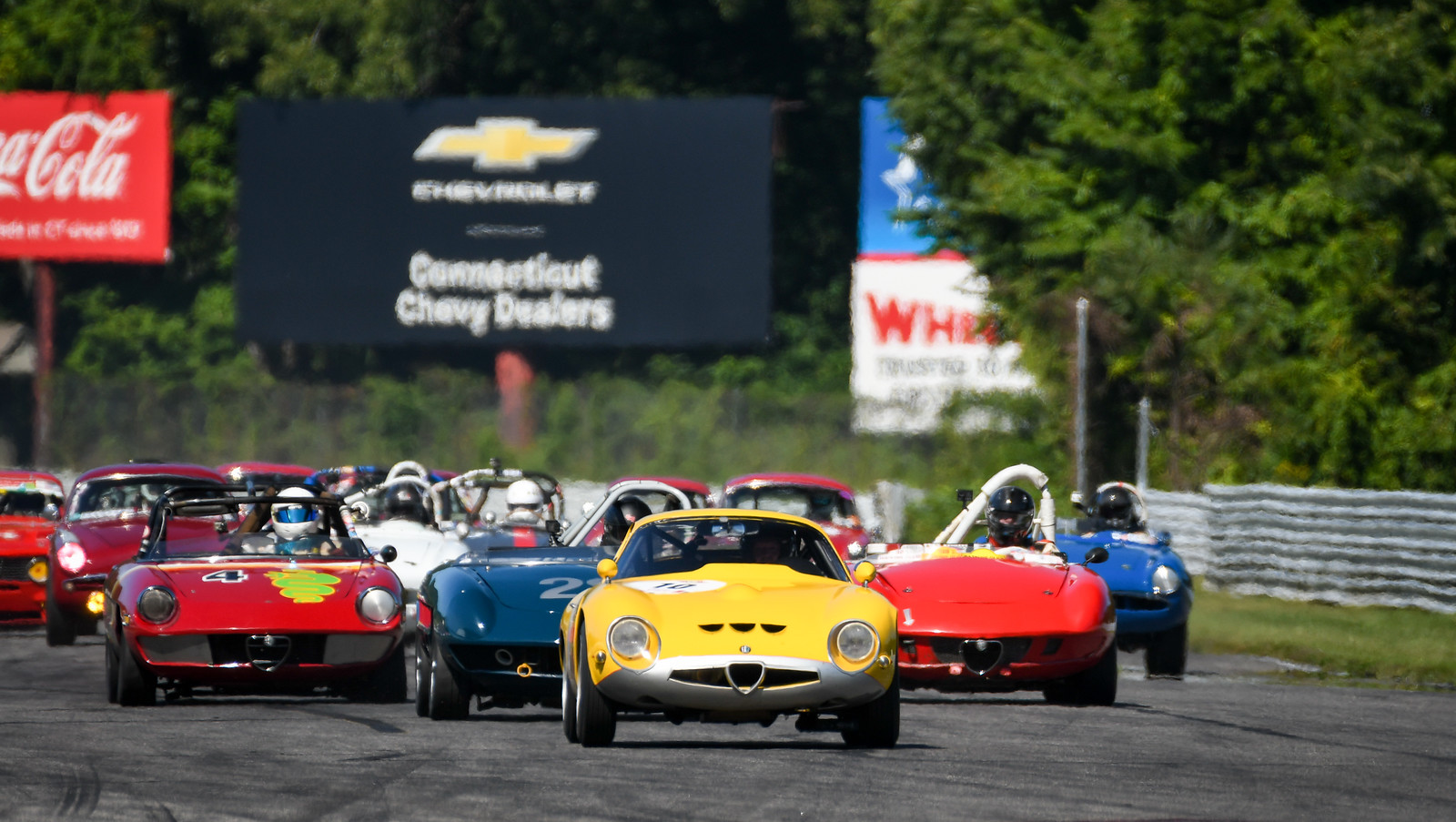
Historic Festival 44 brought together one of the most significant collections of Alfa Romeos ever assembled in one place, spanning more than a century of the Italian marque’s history, from machines representing its earliest years in international competition to the touring cars of the 1990s. Alfa Romeo served as the featured marque for the five-day Festival, with the celebration culminating Monday as 50 Alfa Romeo competitors took part in a dedicated all-Alfa race. The Alfa celebration was part of the largest Historic Festival in modern history, with a full field of 287 competition entries representing 27 states and three countries. Competition participation has increased in each of the last three years, establishing a new modern-era record each year. Registration for Historic Festival 44 was ultimately capped after both paddocks reached capacity.
While the record field filled the track, the significance of the Alfa Romeo gathering extended well beyond the competition itself. Lorenzo Ardizio, chief curator of the Museo Storico Alfa Romeo (Alfa Romeo Museum) in Arese, Italy, traveled from Italy to experience Lime Rock Park and Historic Festival for the first time. “Some of the best examples, some of the best cars, are no longer in Italy, and many of them are in the U.S.,” Ardizio said. “I’m really surprised because not only are many of them in the U.S., but they are here today!”
The 26-car Alfa Romeo display in A Paddock brought together prewar and postwar automobiles, competition cars, concepts and one-offs from the collections of Lawrence Auriana, father-and-son collectors Ven and Nick Fonte, and Paul Gould. “Alfa has some prewar and postwar cars that are very difficult to see in person, and it is very impressive to see them here together, side by side,” Ardizio said. “I think it’s a very nice portrait of what Alfa Romeo has done in 116 years of history.”
Among the earliest was a 1923 Alfa Romeo RLTF, representing Alfa Romeo’s first post-World War I sporting model and the machine developed for the Targa Florio. Beside it was a 1924 RLTF, the sole surviving chassis from Alfa Romeo’s four-car 1924 Targa Florio works team. That car carries another remarkable connection to motorsports history; the same chassis carried a 26-year-old Enzo Ferrari to victory in the inaugural Coppa Acerbo at Pescara, a victory Ferrari would later describe as the most satisfying of his driving career. The collection continued through some of Alfa Romeo’s most celebrated prewar competition years. A 1931 6C 1750 Fifth Series Gran Sport represented the model that helped Alfa claim consecutive Mille Miglia victories, while a 1932 8C 2300 “Monza” recalled an era in which the 8C won the 24 Hours of Le Mans four consecutive times from 1931 through 1934. Only 188 examples of the 8C 2300 were produced, including just 10 in Monza specification. A 1934 6C 2300 “Pescara”, the sole survivor of two spiders constructed for Scuderia Ferrari when it served as Alfa Romeo’s competition arm, further connected the Alfa story with Ferrari’s. The car competed in the 1934 24 Hours of Pescara, the race from which the model took its name after Scuderia Ferrari swept the podium. The collection also traced Alfa Romeo’s evolution through coachbuilt road cars, postwar sports cars and later competition machinery, including the Giulietta and the 1994 Alfa Romeo 155 V6 TI DTM, a purpose-built touring car producing approximately 420 horsepower from its naturally aspirated V6.
The Alfa Romeo story at Historic Festival 44 wasn’t limited to the cars sitting beneath the display tents, significant competition Alfas once again became rolling history, taking to the 1.53-mile circuit rather than remaining static displays. The Revs Institute brought the largest collection of automobiles it has ever displayed outside its Naples, Florida, museum, including a 1964 Alfa Romeo Giulia TZ that won the 1600 GT class at Sebring in 1964 with Jim Kaser and Chuck Stoddard that competed in the all-Alfa group. The TZ represented Alfa Romeo’s factory effort to reestablish itself in racing, with final assembly overseen by Carlo Chiti at Autodelta shortly before the operation became Alfa Romeo’s in-house performance and racing department.
For Historic Festival 44 honored guest and lifelong Alfista Donald Osborne, that combination captured what made the weekend extraordinary. “To see some of these cars, some of the most amazing Alfa Romeos on the planet, from some of the most important collections on the planet, all gathered here in these two tents has been remarkable,” Osborne said. “Then add to that, as the icing on the cake, the cherry on top, great Alfas on the racetrack. Alfa Romeo built its reputation in racing, and so we get to see beautiful Alfas, historic Alfas and racing Alfas all in one place in one weekend.”
Osborne’s own connection with Alfa Romeo dates to the 1964 New York Auto Show, where he first encountered an Alfa Romeo 2600 Sprint as a child. His connection to Lime Rock runs nearly as deep. He learned to drive performance cars at The Park through the Skip Barber Driving School and is a longtime member of the VSCCA. Returning to Historic Festival for the first time since 2008, Osborne served as a guest speaker and Alfa Concours judge during the weekend. On Monday, he sang the national anthem before waving the green flag as Alfa Romeo’s racing history roared into life.
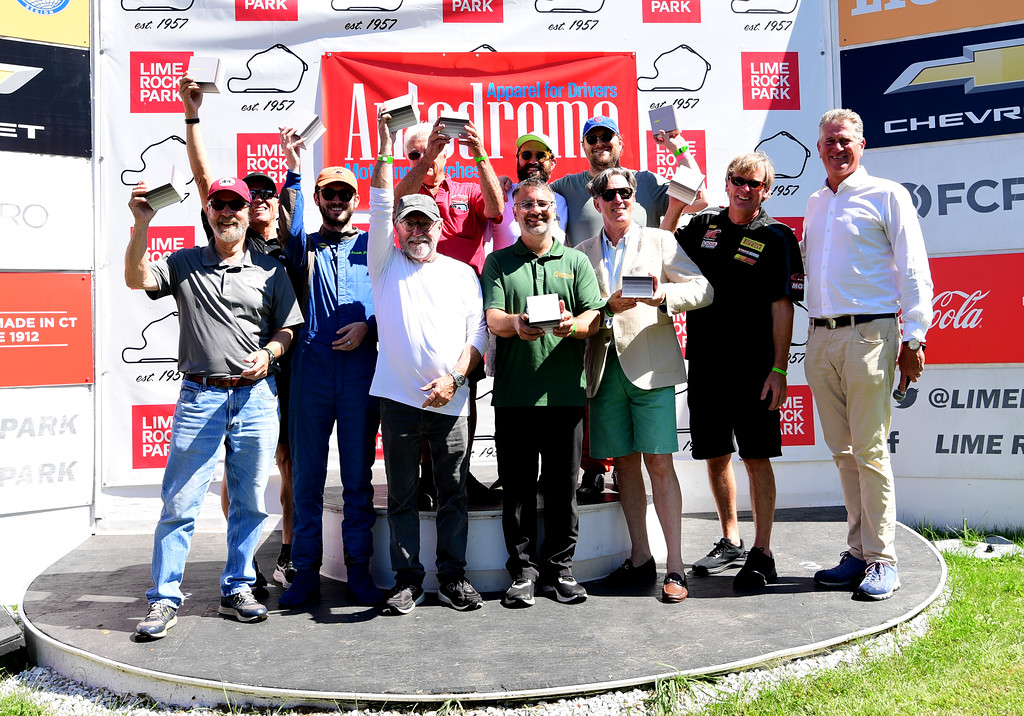
The scale extended well beyond the competition field. Major displays added another layer of racing history throughout The Park. In addition to the Alfa Romeo gathering and unprecedented Revs Institute display, Historic Trans-Am Alley brought together 20 original Trans-Am cars associated with drivers including Dan Gurney, George Follmer, Parnelli Jones, Jerry Titus, Sam Posey and Mark Donohue. The Automobile Racing Club of America (ARCA) was also celebrated with a special display tracing the organization’s place in the earliest chapters of American sports car racing. The historic ARCA cars went from display to track during a special lunchtime exhibition race, bringing another piece of prewar racing history back to life at Lime Rock Park. Formula Junior added another significant gathering on track, with 26 cars competing in the Jim Haynes Memorial and representing marques including Stanguellini, Lotus, Cooper, Brabham, Lola, OSCA, Elva and Kieft. Sunday in the Park presented by HUB added more than 190 rare and significant vintage and rare cars and motorcycles to the Lime Rock Concours, while the Gathering of the Marques placed hundreds more around the track, with 1,200 cars on display for the day. The weekend kicked off with a 125-car Historic Festival Parade prepared by Northwell Health, NBT Bank and Falls Village Inn. Autodromo, the official watch of Historic Festival, also awarded nine special HF44 watches to drivers who best represented the spirit of historic racing.
With Historic Festival 44 complete, Lime Rock Park will return to action Oct. 23-24 for MiataCon, the final major event of the 2026 season.